




I know this for two reasons. The first is that I have been a doula for more than twenty years and have been present at more births than I can count. The second is that I have given birth to eight children of my own, four of them at home, and learned the difference the hard way.
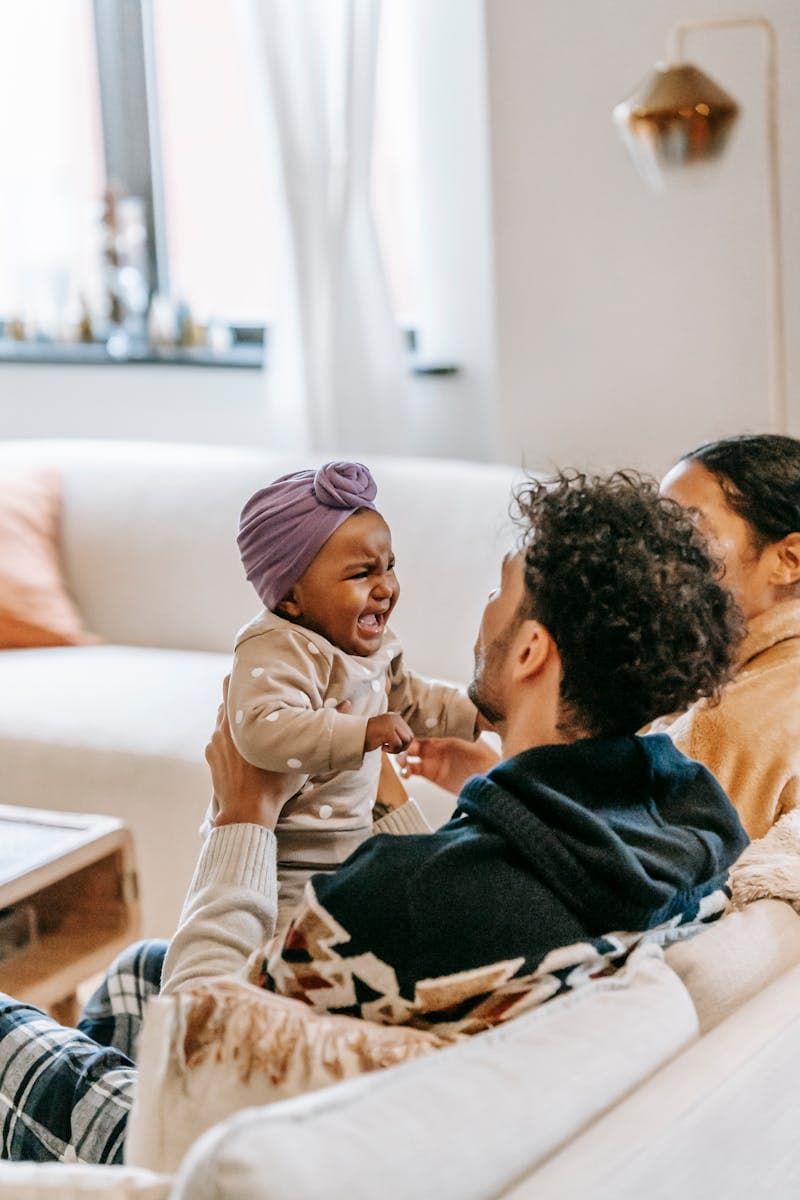
The first time, I was twenty-one. It went well, they say, because the baby was healthy and I survived. But I do not remember the contractions. I remember lying in a bed and hearing the room talk over my head. One decision after another about my body, without anyone really turning to me. My husband sat beside me and stayed quiet, because he did not know what to say. They were there to save me and our baby, after all. I stayed quiet too. I had no strength left to explain. No strength left to question.
It took several years before I understood that I had carried something away from that room, and longer still before I learned that it has a name and affects roughly one in six women.
Obstetric violence.
The day I understood that, I made up my mind. No woman should have to feel like a spectator at her own birth. That is why I chose to train as a doula.
The seven children who came after taught me the rest. The second time, I was angry enough to keep looking until I found midwives who stood beside me instead of above me, and I gave birth at home. The third and fourth, the same. The fifth was in such a hurry that my husband almost caught him himself in the pool. The midwives arrived twenty minutes before he was out.
Then we moved to Finland, and there it came to a stop. A few years earlier, a piece of my cervix had been surgically removed, and everyone I asked said it should make no difference to a birth. It did. The hospital did not see me as a woman about to give birth, but as a risk.
The size of my older children, numbers in a file. They laid me on my back and looked at the screen instead of at me. Seventeen hours, ten of them in tears, a third-degree tear, a hemorrhage, an operation. I went home with a blood count of eighty and a bond with my child that I am, eight years later, still healing.
Before my seventh birth, I cried my way to a referral back to Sweden. She was out twenty minutes after we came through the hospital doors, and then it all repeated itself: the placenta stayed put, another hemorrhage, another operation, and me alone in recovery without knowing where my newborn was. The birth itself was fine. It was everything around it that was not.
The eighth birth became my redemption. This time I wrote a plan no one could talk me out of. The midwife who was not right for me, I replaced. The one who came instead understood me without words and kept the doctor outside the door, because she understood it was necessary for me to give birth the way I wanted. I got to give birth in the water, undisturbed. And the placenta came easily and I barely bled. In the hospital, but on my terms, not theirs.

Four at home, four in hospital. It is in the distance between them that I have learned much of what I know today, and what I have learned is simple: what matters is never the building or the equipment. It is the person closest to you and what she, deep down, believes about your body.
Not controlled. Not silenced by monitoring. A woman doing what women have done for two hundred thousand years.
I am not afraid of giving birth. I have been present for far too many to be. What troubles me is a system that makes birth dangerous and then points to the danger as the reason it needs to exist.
Take away the stress, the clock and the stranger who handles you like a container, a list to tick off, a set of routines to carry out, and what remains is a woman who already knows how.

This is not a belief, it is what the research shows. That where the midwife takes care of the normal birth, interventions are kept low and someone stays with the woman the whole way, that is where babies are born most safely in the world.
So that is what I do.
I am rock-hard about your rights and at the same time soft with your fear. And I have learned that it is possible to be both at once. I hold your hand at three in the morning when your husband has fallen asleep on the couch. I answer the message you send at midnight saying that something feels wrong. I stay in the silence afterwards without filling it with advice.
And I tell you the things you need to hear, because you do not come to me for agreement, but so that someone will truly listen to you and stay the whole way.
What I do is not a service you book. It is a relationship, from the two lines on the test to long after the baby has come into the light. No one is made ready for a birth, and for the time after it, in a weekend course. It takes the time it takes, and that time I have. No clinic, no waiting room, no staff. Only presence, a lifetime of experience and the patience to stay with you until you yourself know what kind of birth you want, and how to create the conditions to get it.
A little about me: doula for more than twenty years, Active Baby instructor, breastfeeding counselor, mother of eight. I have lived in five countries, homeschooled my children and built this from nothing. Every country I have lived in has shown me the same thing from a new angle, that how we treat the one giving birth says everything about how we see women, children and families.
You do not need someone to tell you how to give birth. You need someone who will stay beside you while you remember that you already can!
By your side,
Therése