
Safer Than They Told You
The largest studies ever run put planned home birth level with the hospital for the baby and far gentler on the mother. Someone should have told you.

Ask about home birth in America and you do not get a number. You get a face. The raised eyebrow. The careful pause from a friend who means well. The doctor whose answer arrived before your question ended. What if something goes wrong. It is a fair question, the fairest one there is, and it has an answer, counted across more births than any single hospital will ever see. Almost nobody hands that answer to the woman actually doing the deciding. So here it is.
The biggest study ever run
In 2011 a team in England finished the largest study of birthplace safety anyone has ever done. Sixty-four thousand low-risk women, followed in real time across four settings: home, two kinds of midwife-led units, and the standard hospital ward. The government paid for it. Independent statisticians checked it. Nobody gets to wave it off as activism.
For women who had given birth before, the result is short enough to memorize. The babies did just as well at home as in hospital. What changed, and changed enormously, was what happened to the mother. At home, eighty-eight women in a hundred had a normal birth. In hospital, fifty-eight. The cesarean rate at home ran at a small fraction of the hospital rate.
Sit with that. Same safety for the baby. A completely different birth for the mother. The building she walked into changed her odds of major surgery far more than it changed anything about whether her child came home.
Half a million more births said the same
One study can be a fluke. So look at the Netherlands, where home birth is ordinary and the state keeps national records on every one. More than half a million births in the data. No rise in newborn deaths. And on the harms to the mother, home came out ahead across the board. Serious bleeding after birth, the kind that genuinely threatens a woman, happened at roughly half the hospital rate.
Then Canada. Researchers in British Columbia compared three groups: planned home birth with a midwife, hospital birth with a midwife, hospital birth with a physician. Home did not merely keep up. It had the lowest newborn death rate of the three, alongside far fewer forceps, vacuums and interventions for bleeding.
Different countries. Different decades. Different research teams with no reason to agree. The same answer keeps falling out of the data, and it is not the answer American women are given.
19.6 vs 37.6
serious postpartum bleeding per 1,000 births, home against hospital (Netherlands)
0.35 vs 0.64
newborn deaths per 1,000, home midwife against hospital physician (British Columbia)
The study they will hand you instead
One famous study found home birth tripled the risk to the baby, and it is the one that surfaces the moment you push back. It deserves a real look, so take one. Other researchers took it apart in print. It mixed planned home births with accidental ones, babies born on bathroom floors before help arrived. It counted twin and breech deliveries no home midwife would touch. And it hung its scariest number on a few dozen cases where the math needed hundreds.
The study did not survive review. The biggest American body of obstetricians cites it anyway, in the documents that shape what women get told at their appointments. The single most influential argument against home birth in the United States is one the evidence already threw out.
Same numbers, opposite advice
Britain reads the exact same research America reads. After weighing it, the British health guidelines now call planned home birth particularly suitable for a low-risk woman who has given birth before, and they require providers to lay out a real choice of birthplace and let her make it. The United States has no such guideline. Its main obstetric body still treats the hospital as the only properly safe address.
Same data. Opposite posture. One system puts the numbers in front of you and trusts you to weigh them. The other weighs them for you, quietly, and calls the result safety. The distance between those two is not science. It is culture, and habit, and a system that finds it easier to manage you than to inform you.
“Where you give birth changes nearly everything that is done to you, and almost nothing about whether your baby comes home safe.”

The safety was never in the walls
Read the research closely and the thing protecting babies is not an address. It is a system. A trained midwife who recognizes the moment a labor starts leaving normal. A transfer plan made in advance. A hospital near enough to reach in time. Where those three exist, the studies agree across hundreds of thousands of births. Where they are missing, the picture changes, and an honest midwife says so first. Home birth is not safe because home is magic. It is safe because it is built to be.
What the safest countries already know
Pull the lens all the way back. The countries where mothers and babies are least likely to die are Norway, Sweden, Finland, the Netherlands. In every one of them, a midwife leads normal pregnancy and birth, and the surgeon is saved for genuine emergencies. Norway records close to zero maternal deaths most years. Sweden runs around five per hundred thousand births. The United States runs past twenty-two.
The World Health Organization did the arithmetic on that pattern and concluded that midwife-led care for every woman could prevent more than half of the maternal and newborn deaths happening now. From that height, home birth stops looking like a fringe risk. The midwife at your kitchen table is the same kind of professional who runs maternity care in the safest countries on the map.
The honest limits
Now the part the brochures skip, because you deserve the whole picture and not just the flattering half. The reassuring numbers are clearest for a woman who has done this before. For a first baby, the English study found a small but real rise in risk, and nearly half of the first-time mothers who planned a home birth transferred to hospital during labor.
That transfer number sounds like failure until you understand what it is. It is the system doing its job. A midwife caught a first labor drifting away from normal and moved her mother early, calmly, with time to spare, which is exactly why the outcomes stayed close. A planned home birth with a good midwife is not a refusal of the hospital. It is a calmer road to it, taken only if you need it.
So the lines are these: low-risk pregnancy, trained midwife, reachable hospital. Inside them the evidence is steady. Outside them it is a different conversation, and a good midwife will tell you which side of the line you are on. Knowing the lines is not a reason for fear. It is what turns home birth from a leap into a decision.
It was never whether home birth is safe. It is why a safe thing was sold to you as a reckless one.
What women say when somebody finally asks
One measure never makes the safety debate, and it is the one women raise first. How the birth felt. Whether they trusted the people around them while they were at their most exposed. When Irish researchers asked women to rate trust in their provider, home birth mothers answered nearly ten out of ten. Hospital mothers answered five. Not a sliver of difference. Double. A Greek team measuring how respected women felt during their births found the same shape, home far out ahead of hospital, as if the two groups had given birth in different centuries.
You can also watch women vote with their feet. Home birth in the United States has climbed for two decades, and it is rising fastest among Black women, the very women the hospital system fails hardest on the outcomes that matter most. They are not misreading the data. They are reading it correctly, adding their own experience, and choosing on purpose. That is all this essay is asking you to do. Not to give birth at home. To decide where you give birth the way you would decide anything else that matters: with the numbers in your hands.
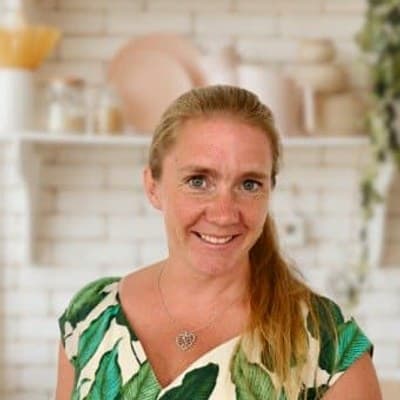
Most of what women are told in pregnancy comes with no source attached. Therese gives you hers. Twenty years of birth work, eight children, four born at home, and an evidence library where you can read what is actually true instead of what gets repeated.
Go deeper
Every number here traces to a source. Read them yourself:
- Home Birth Safety88% normal birth at home vs 58% in hospital. No safety difference.
- Home Birth SafetyHalf a million births. Fewer complications at home by every measure.
- Home Birth SafetyHome birth had the lowest death rate of all settings.
- Home Birth SafetyThe main anti-home-birth study was debunked for bad methodology
- Home Birth SafetyUK guidelines officially recommend home birth for experienced mothers
- Midwifery & Global ModelsMidwife-led countries have near-zero maternal mortality
If this named something you are carrying, say it out loud to someone who stays.
A free hour with Therese. You talk, she listens, you decide. No pitch.
Book a Free CallNot ready to talk? Start with the numbers.
The statistics that change how you think about birth. Sourced and cited, read in 10 minutes.